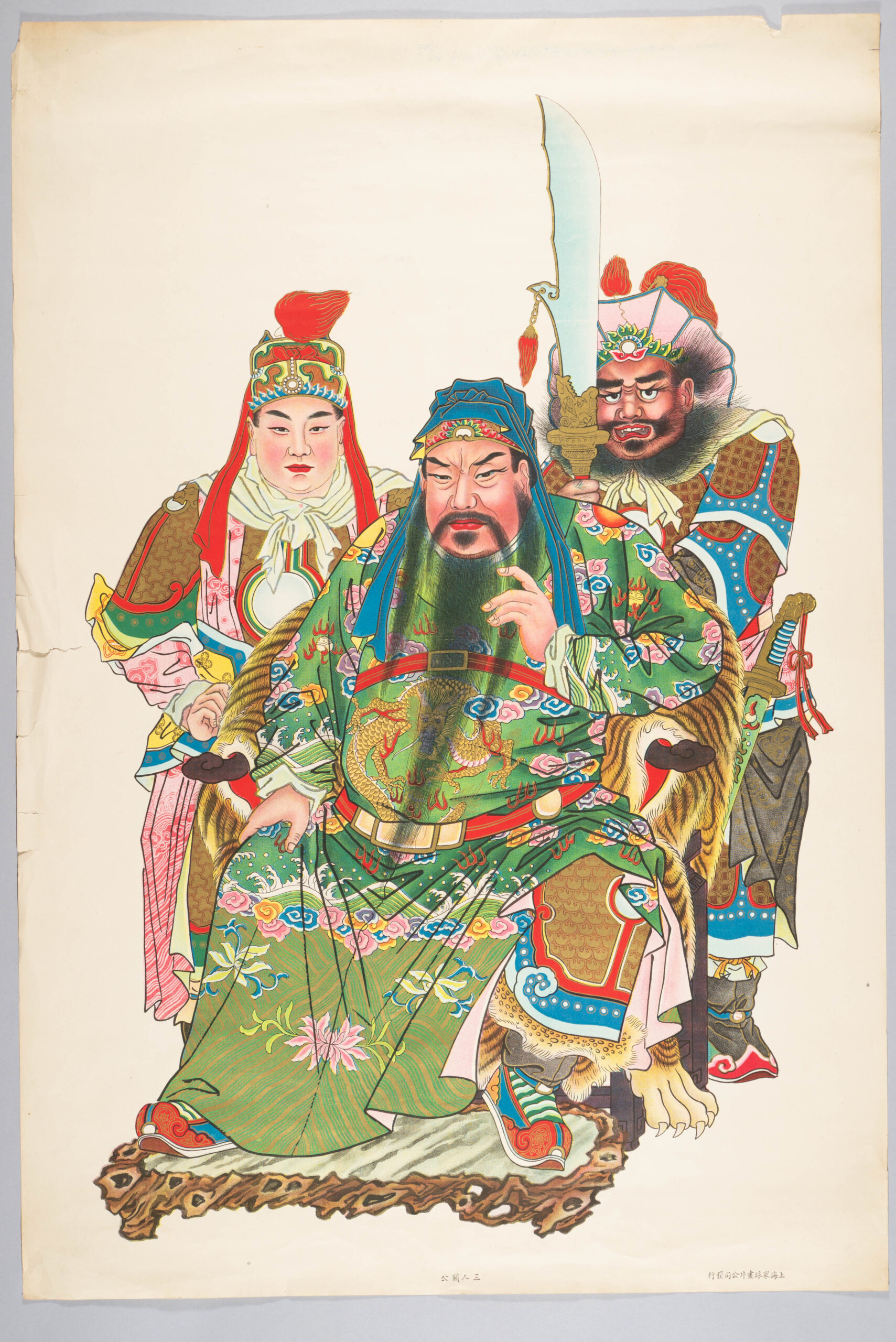
As some readers may know, I am currently conducting research on the history of the MARKK’s collection of industrially produced, popular Chinese prints of the 1920s and 30s. I understand these as “modern traditional prints,” since they combine the imagery of “traditional” Chinese woodblock prints with industrialized methods of production and a mass-media circulation. Below is an example of the god Guangong, accompanied by his youthful retainer Guan Ping and the dark-faced weapon bearer Zhou Cang, printed around 1932 by the Shanghai Global Picture Slip Company (Shanghai huanqiu huapian gongsi 上海環球畫片公司). In 1932, the ethnologist Theodor Danzel brought it from China to Hamburg, to serve as a representation of “traditional” Chinese culture that was assumed to be in the process of disappearing.
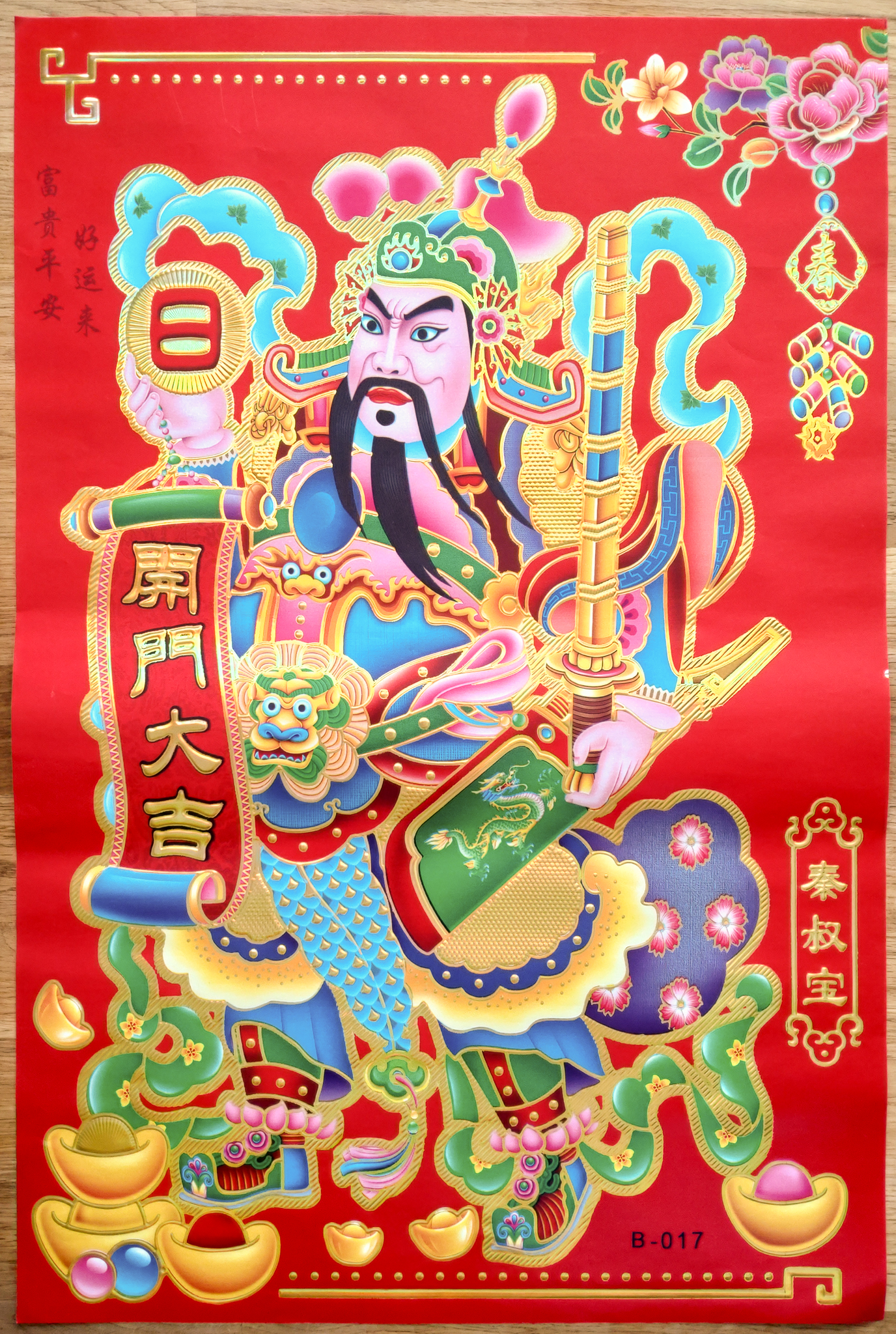
Starting from my engagement with prints like these, I also became interested in contemporary Chinese print culture—to the extent that it still exists at all, amid Weixin and Taobao and the widespread shift of popular culture into the digital realm. Speaking of Taobao: Especially before the Chinese New Year, industrially produced prints of gods can still be purchased, which in some places are still used to decorate front doors during the Holiday. An example of one I purchased, in a Hamburg Asian supermarket of all places, in 2025, can be seen here.
Colleagues with a traditionalist bent dismiss such prints as unworthy of consideration, since they are seemingly not an expression of artistic skill and are therefore “not beautiful.” Thus, patterns of reasoning from the late 19th and early 20th centuries are reproduced with astonishing accuracy—patterns that led precisely to such prints becoming the subject of ethnology and folklore studies, rather than East Asian art history, which for the longest time was preoccupied with conceptions of high culture. Nevertheless, I, too, became curious: Can you still find prints in today’s China that—despite all the upheavals of the 20th century—show traces of the traditional repertoire and combine this with artistic originality and creativity?
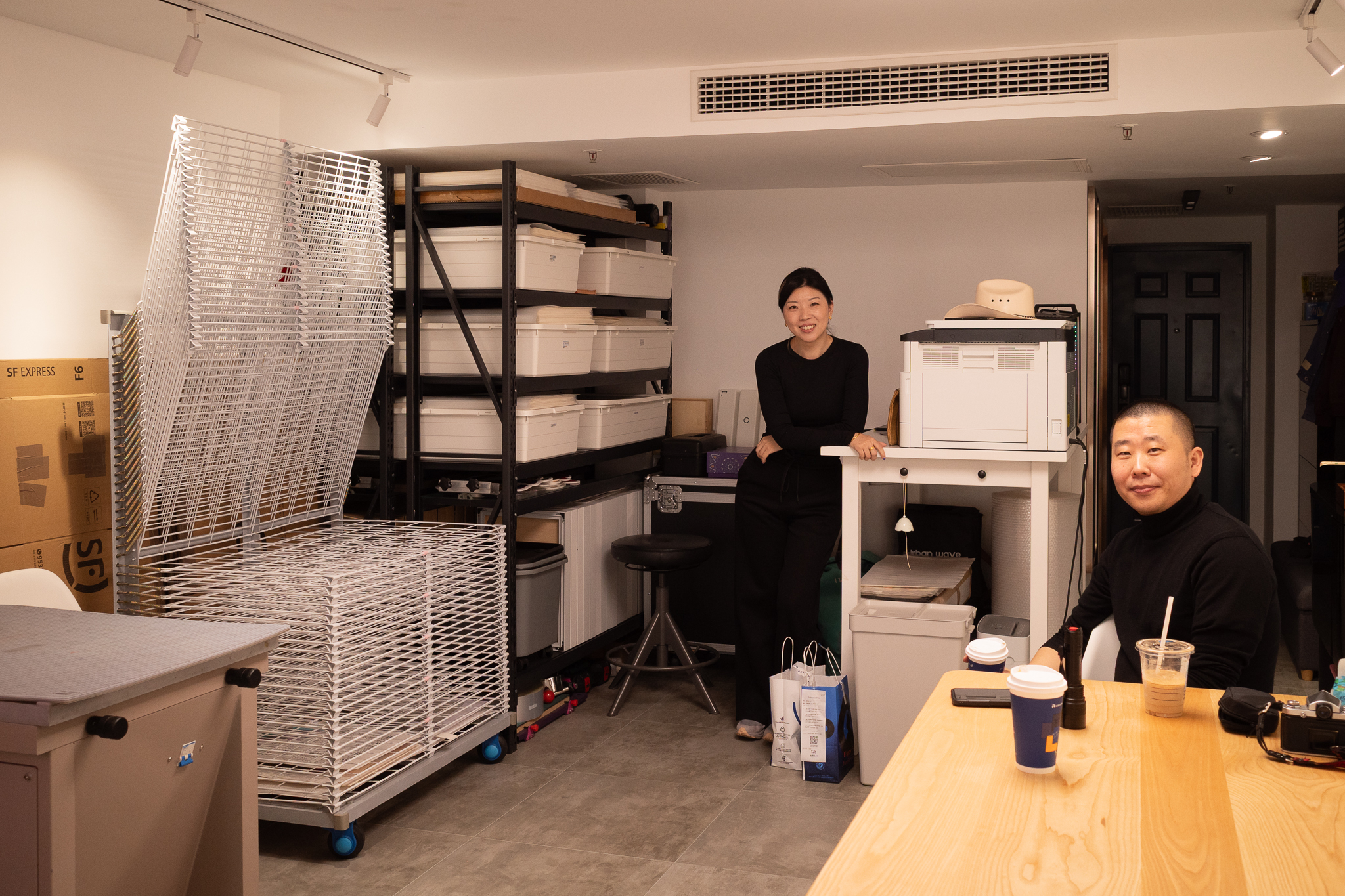
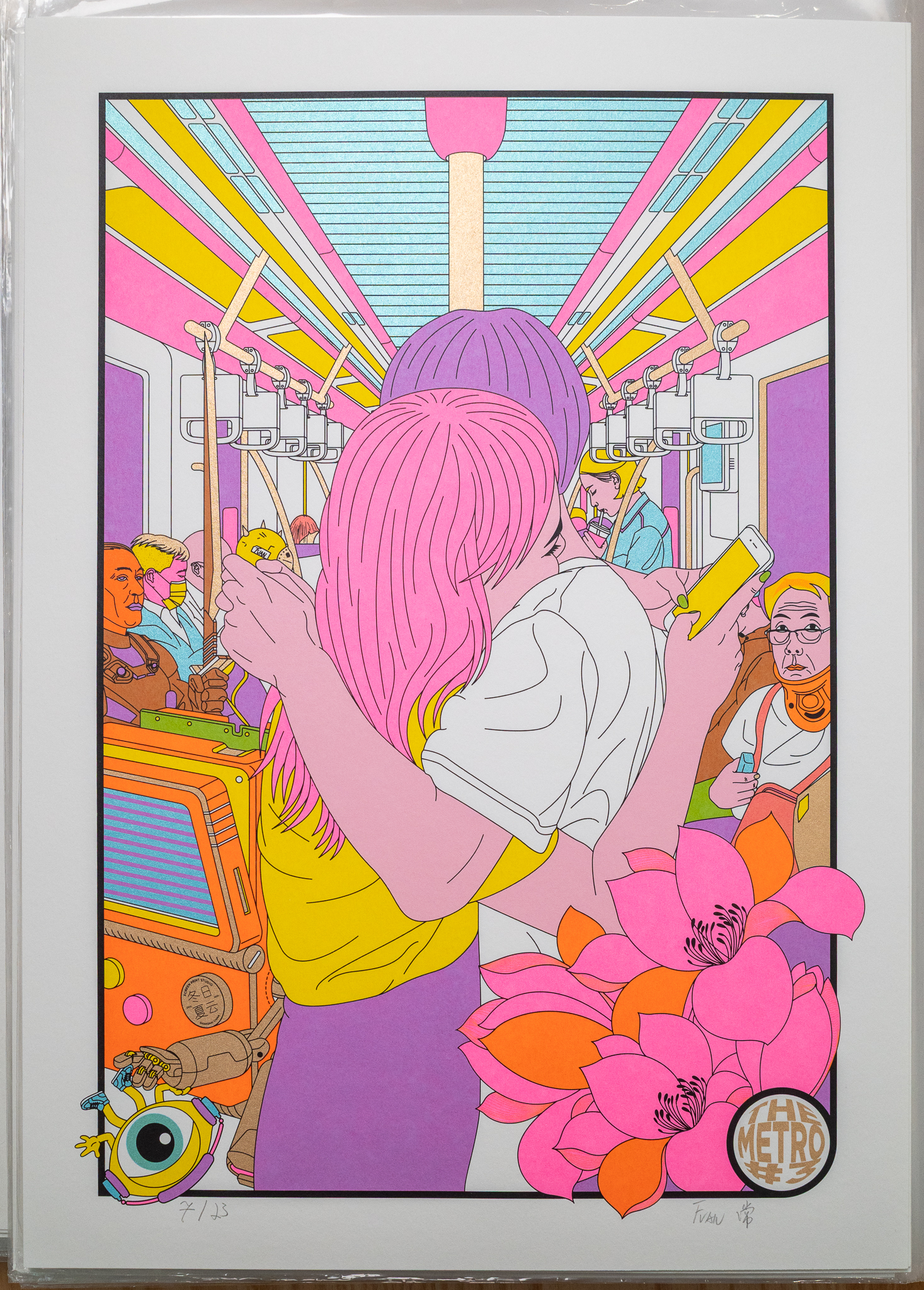
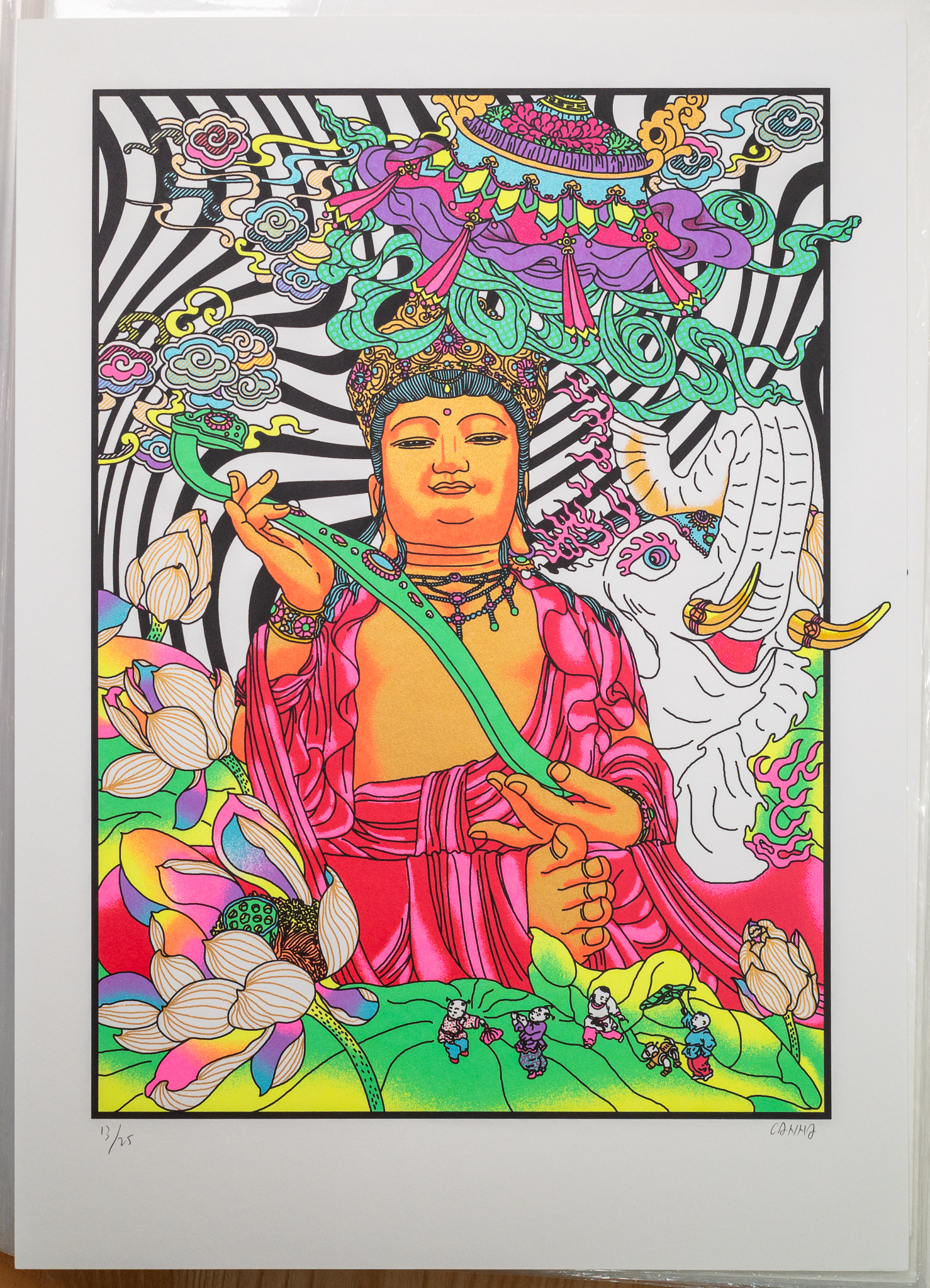
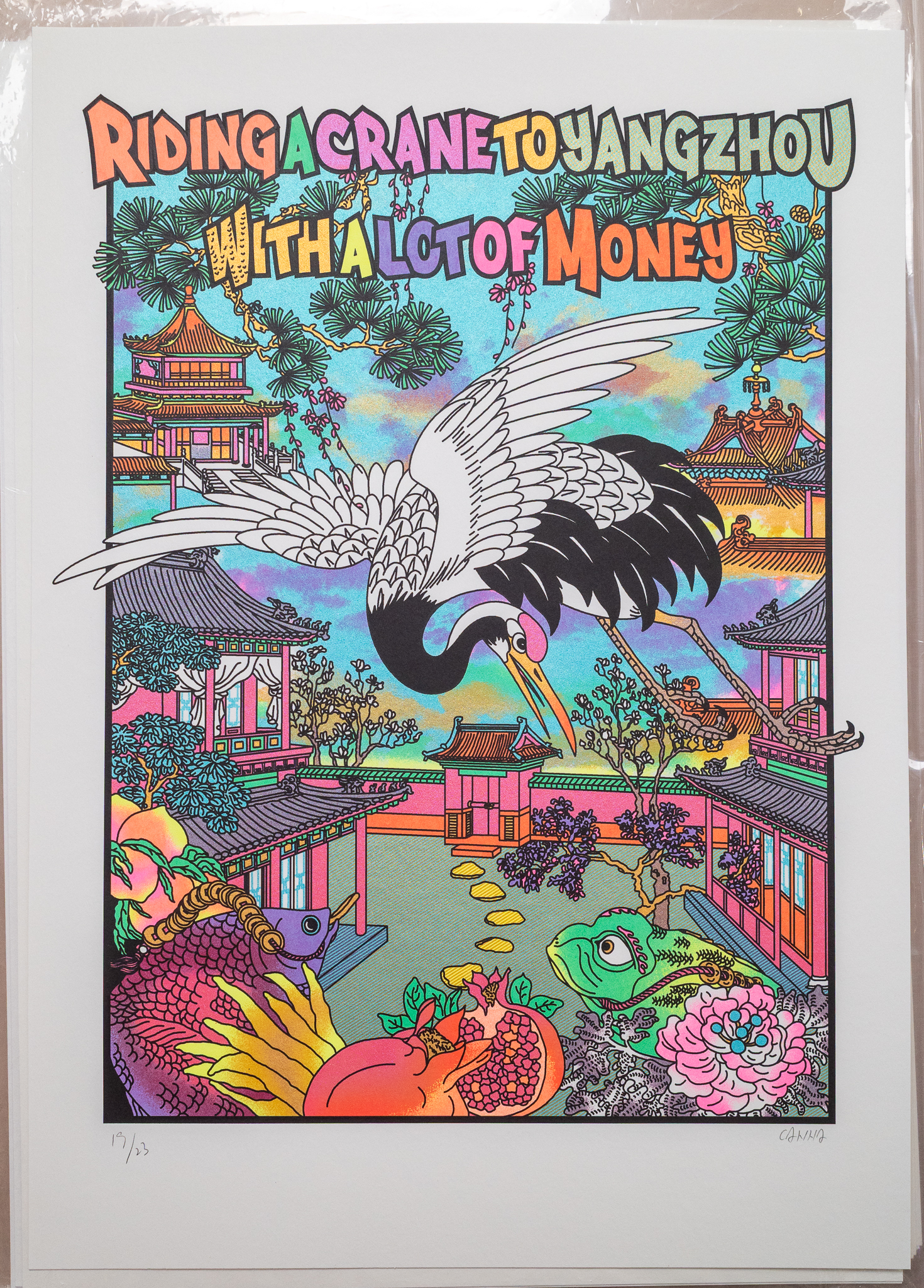
Turns out, yes you can. On April 4, I had the opportunity to visit the studio of artist couple Canna & FVAN, who are part of a wave of Shanghai artists working in the affordable, popular medium of screen printing. Their prints feature (among many other motifs) figures from the Chinese narrative tradition and the popular religious pantheon, and are sometimes created by the duo for specific occasions such as the New Year with its change of the zodiac signs, while utilizing traditional expressive techniques such as the pictorial representation of homophones.
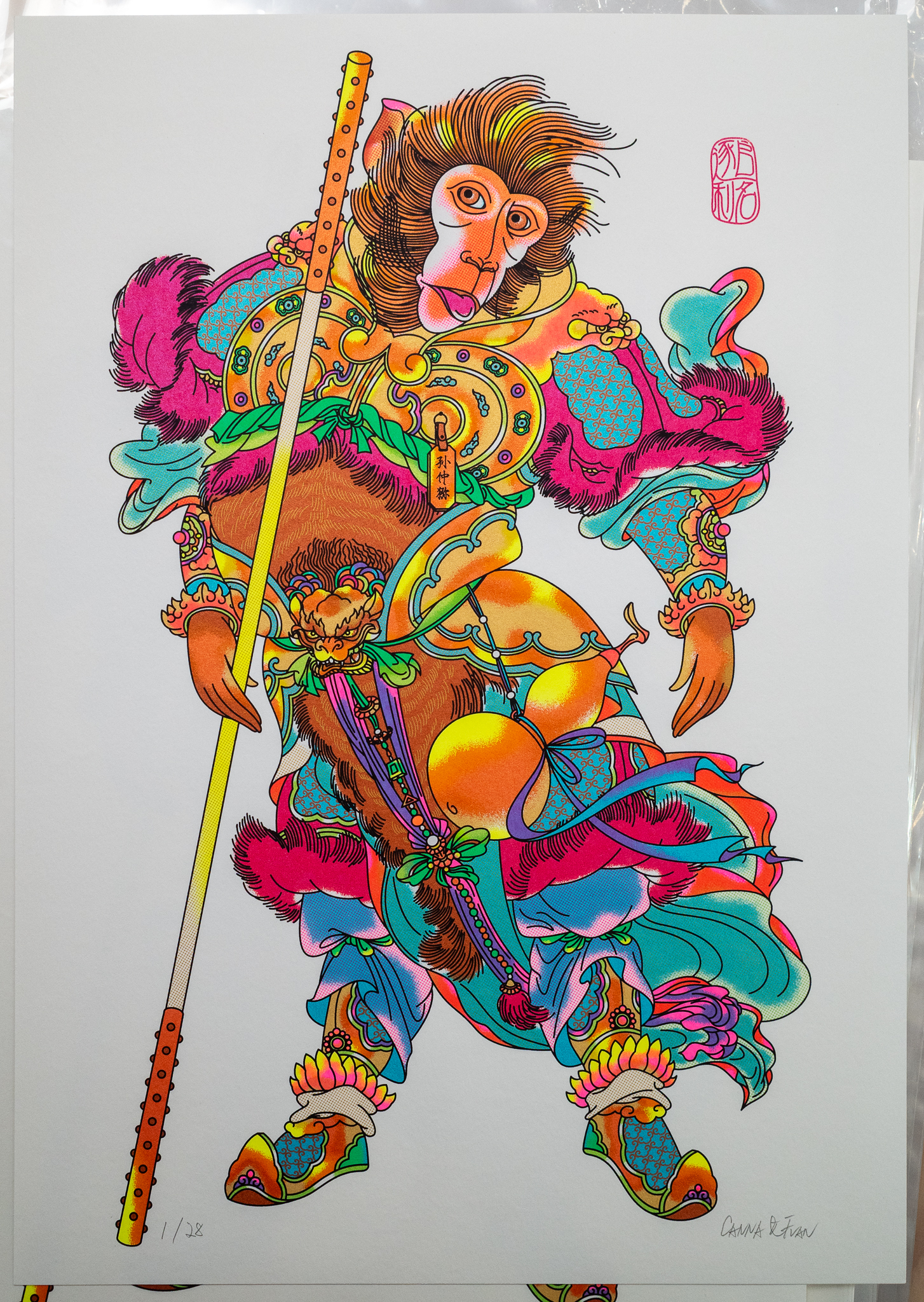
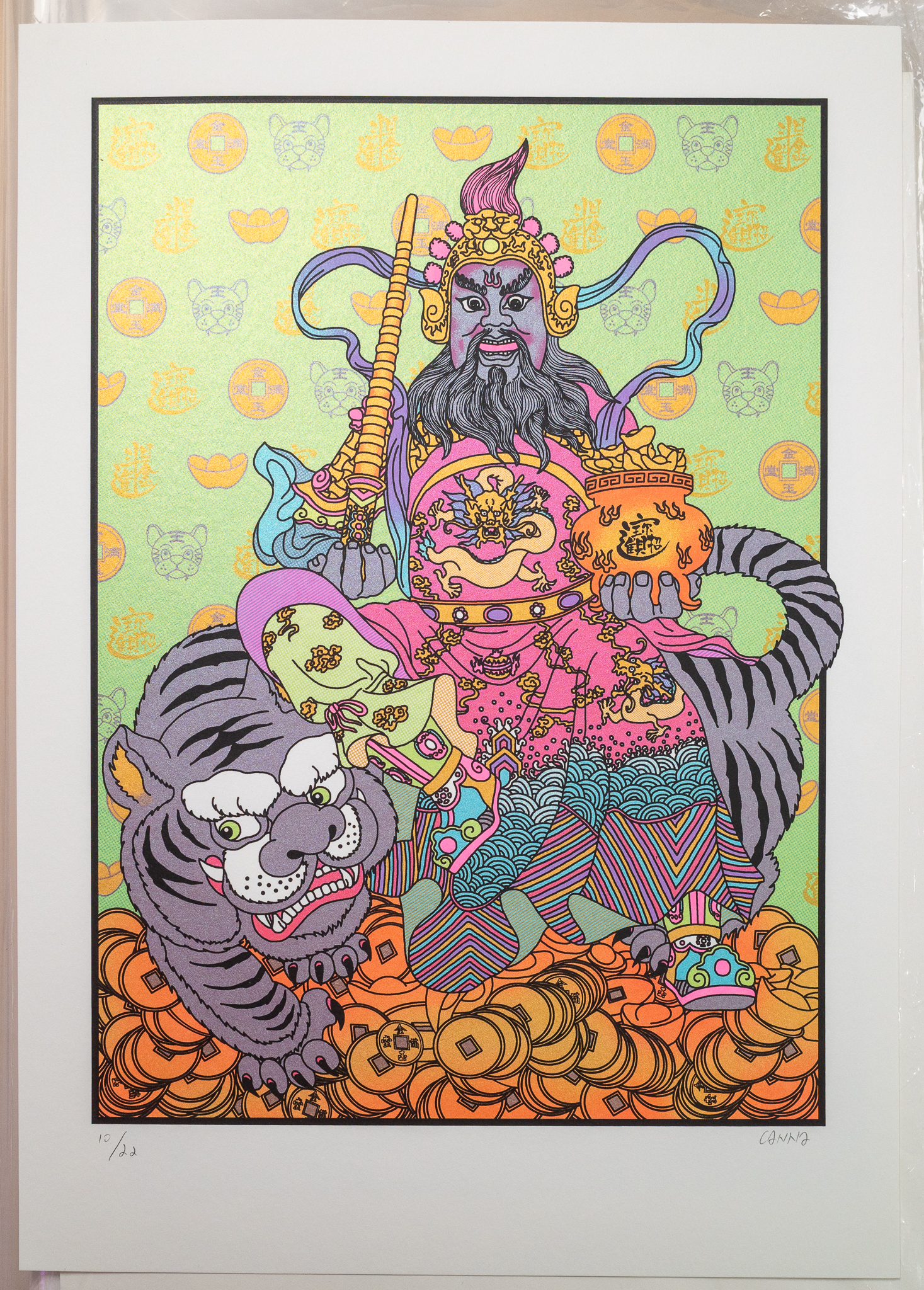

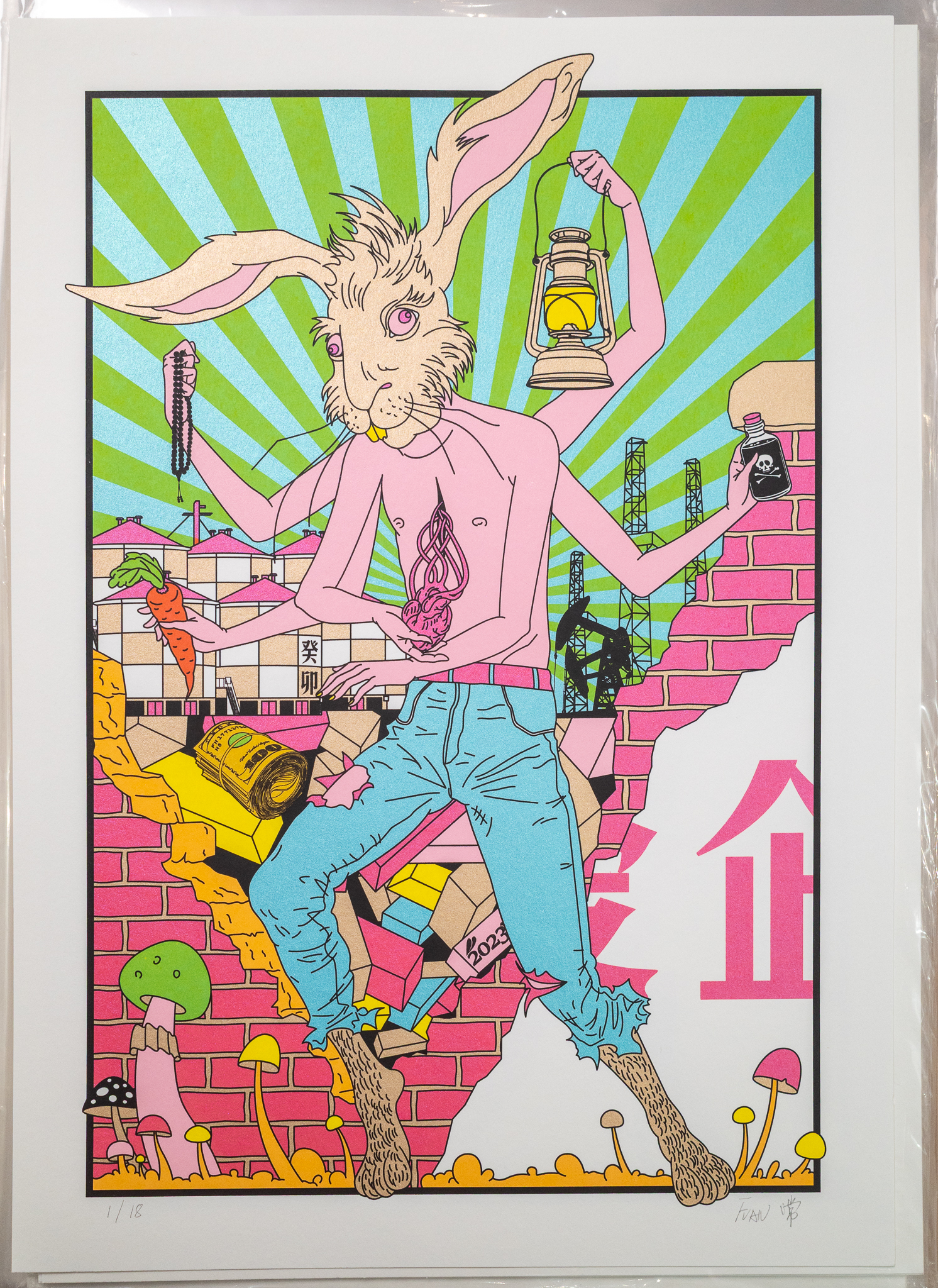

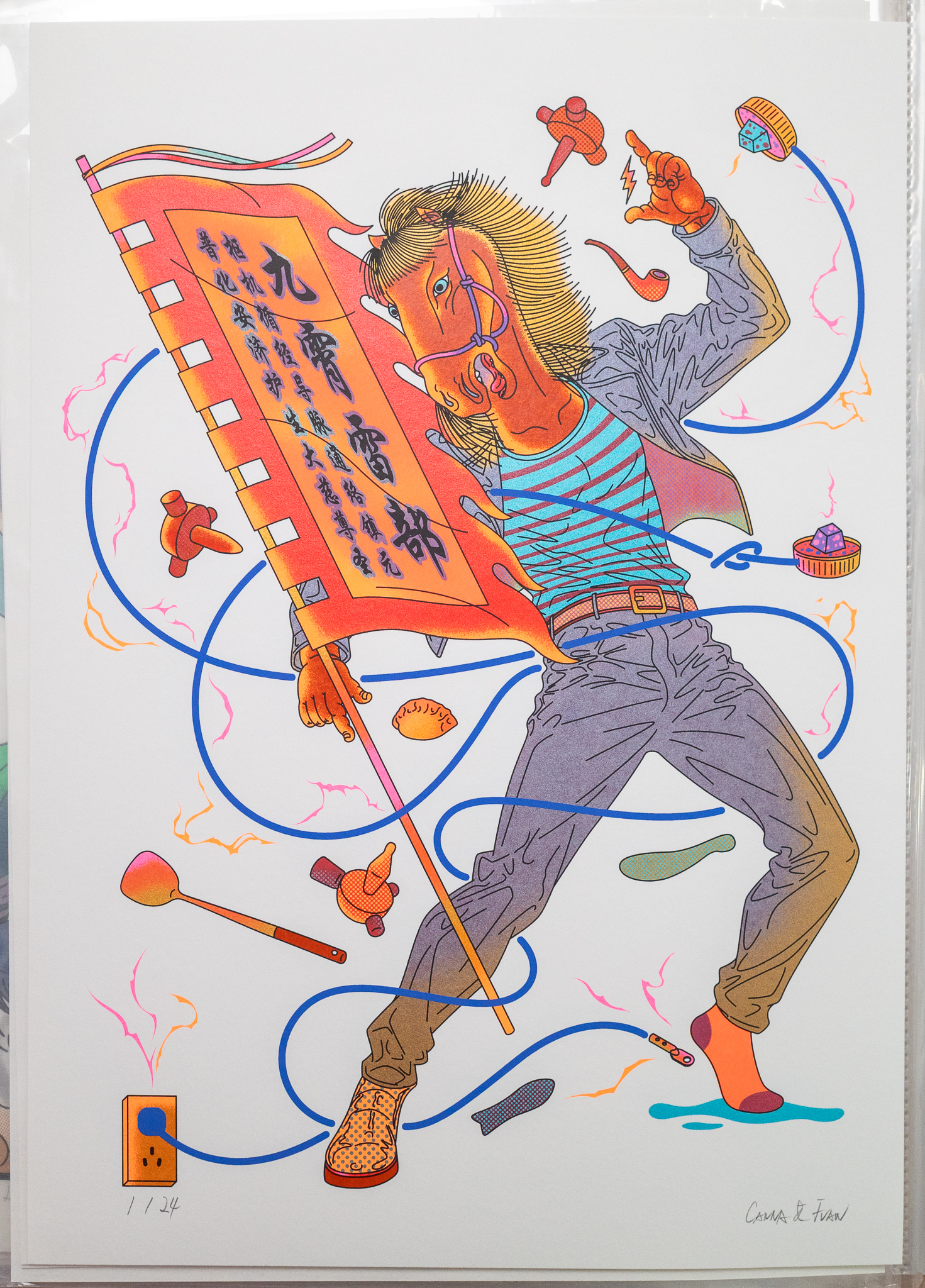

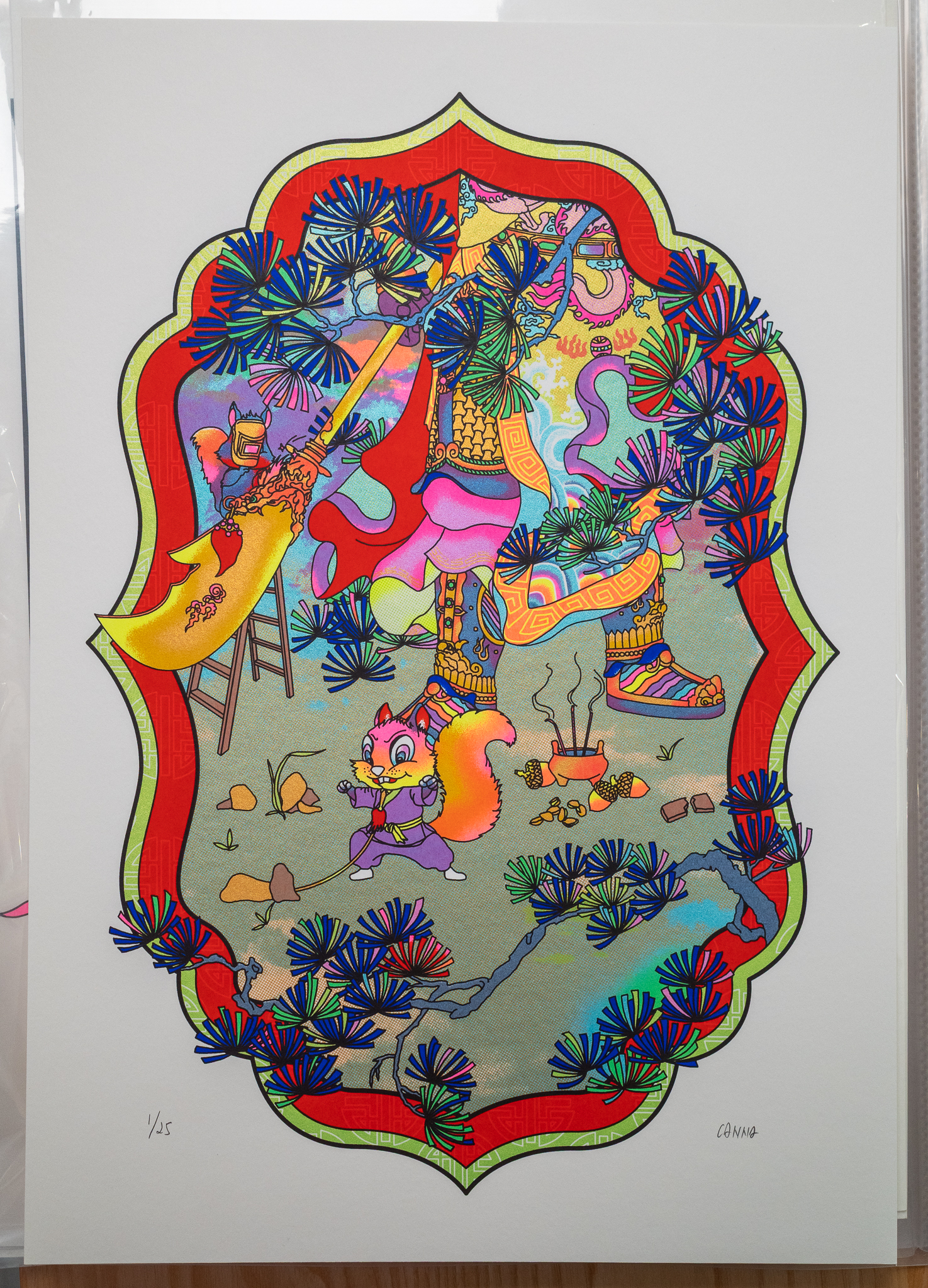
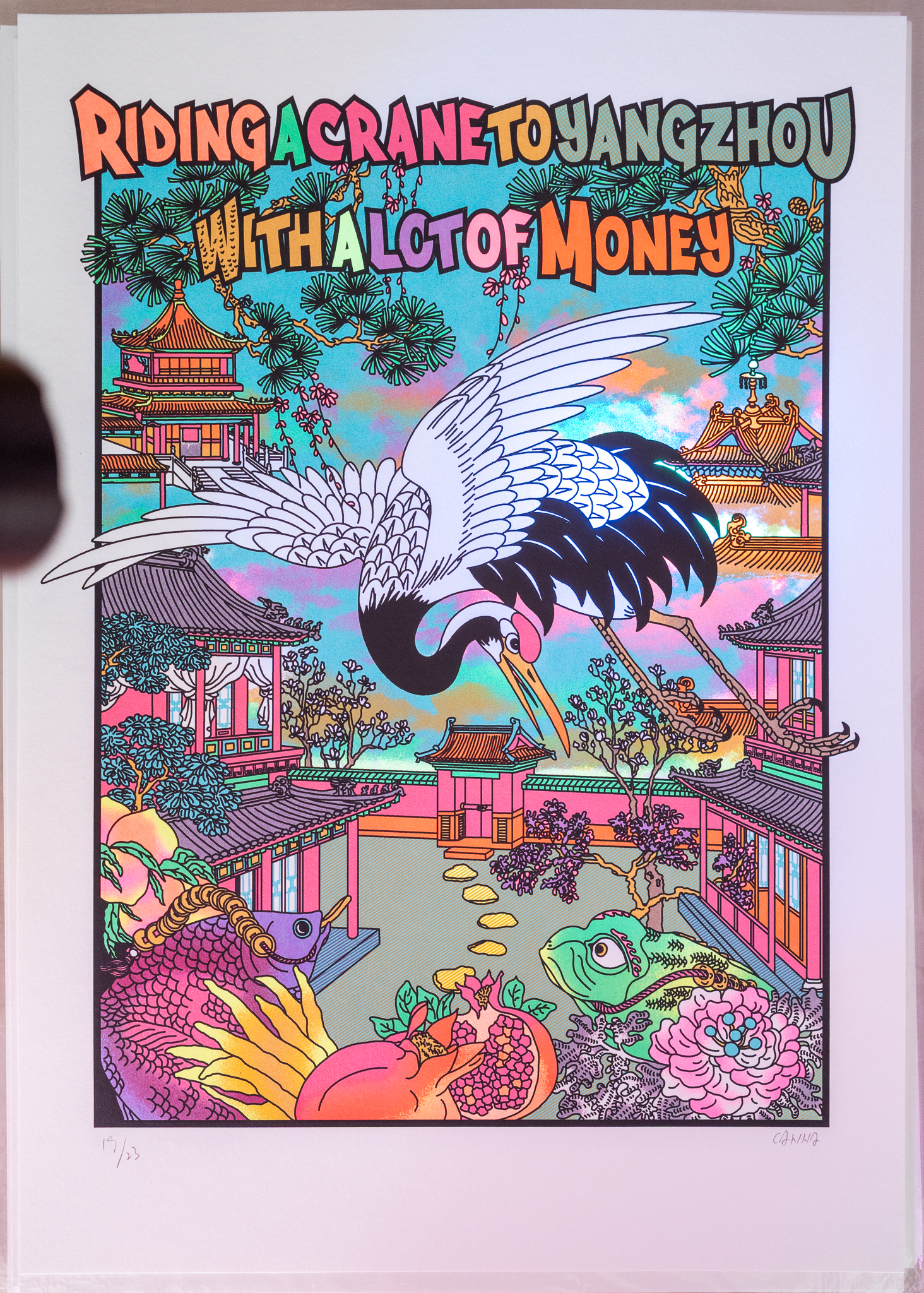
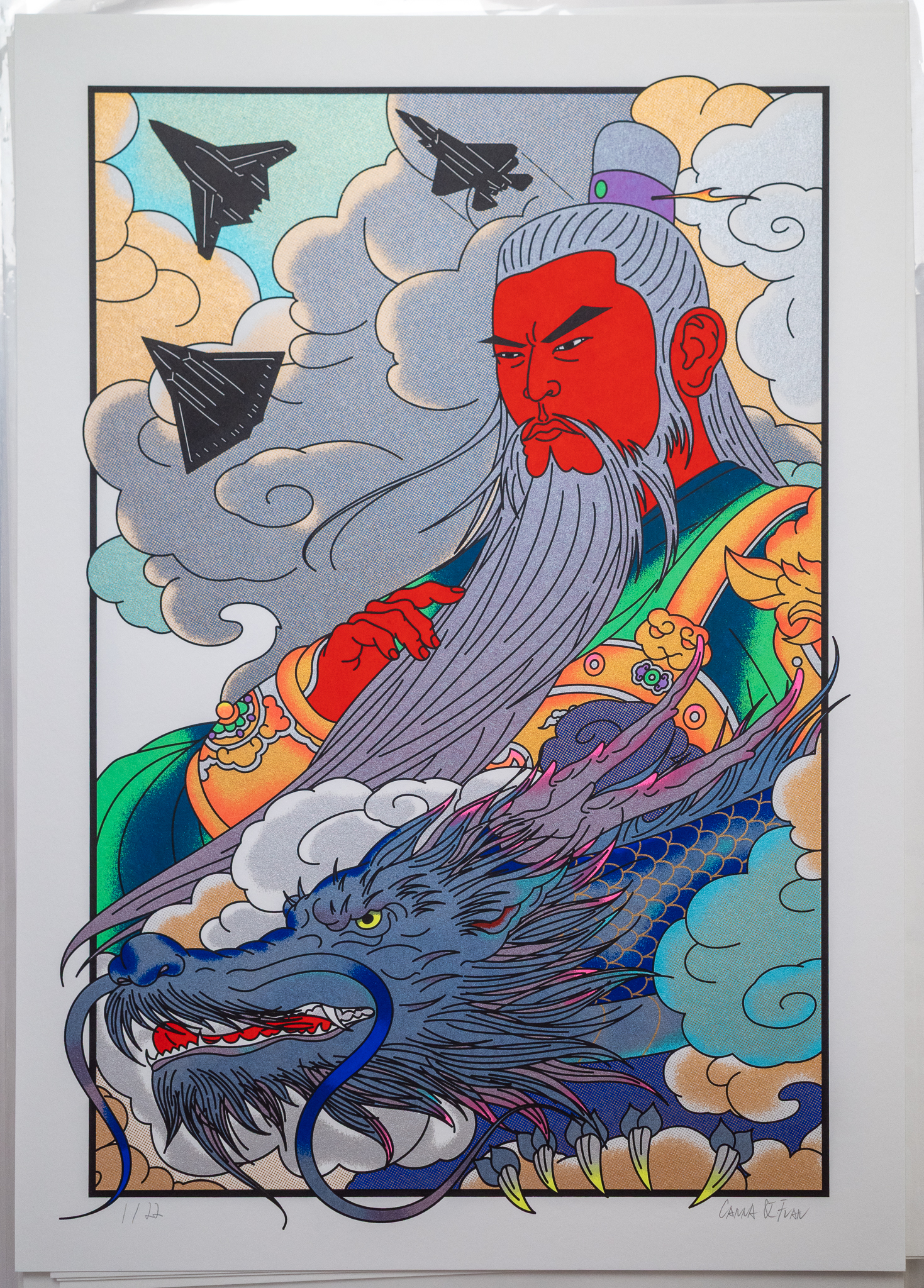

One example of this is Canna’s print of a squirrel (松鼠 songshu) among the branches and cones of a pine tree (松树 songshu). These two are not only connected in nature, with squirrels living in pine trees and feeding on their seeds, but also through their almost identical pronunciation in Chinese. Such homophones were used to set up pictorial puns that work by showing one thing in order to allude to another through the shared pronunciation, which is a subversive form of expression with a long history in Chinese visual culture. As already noted by Jiang Yanwen, usage of these homophones is a typical characteristic of popular Chinese prints.
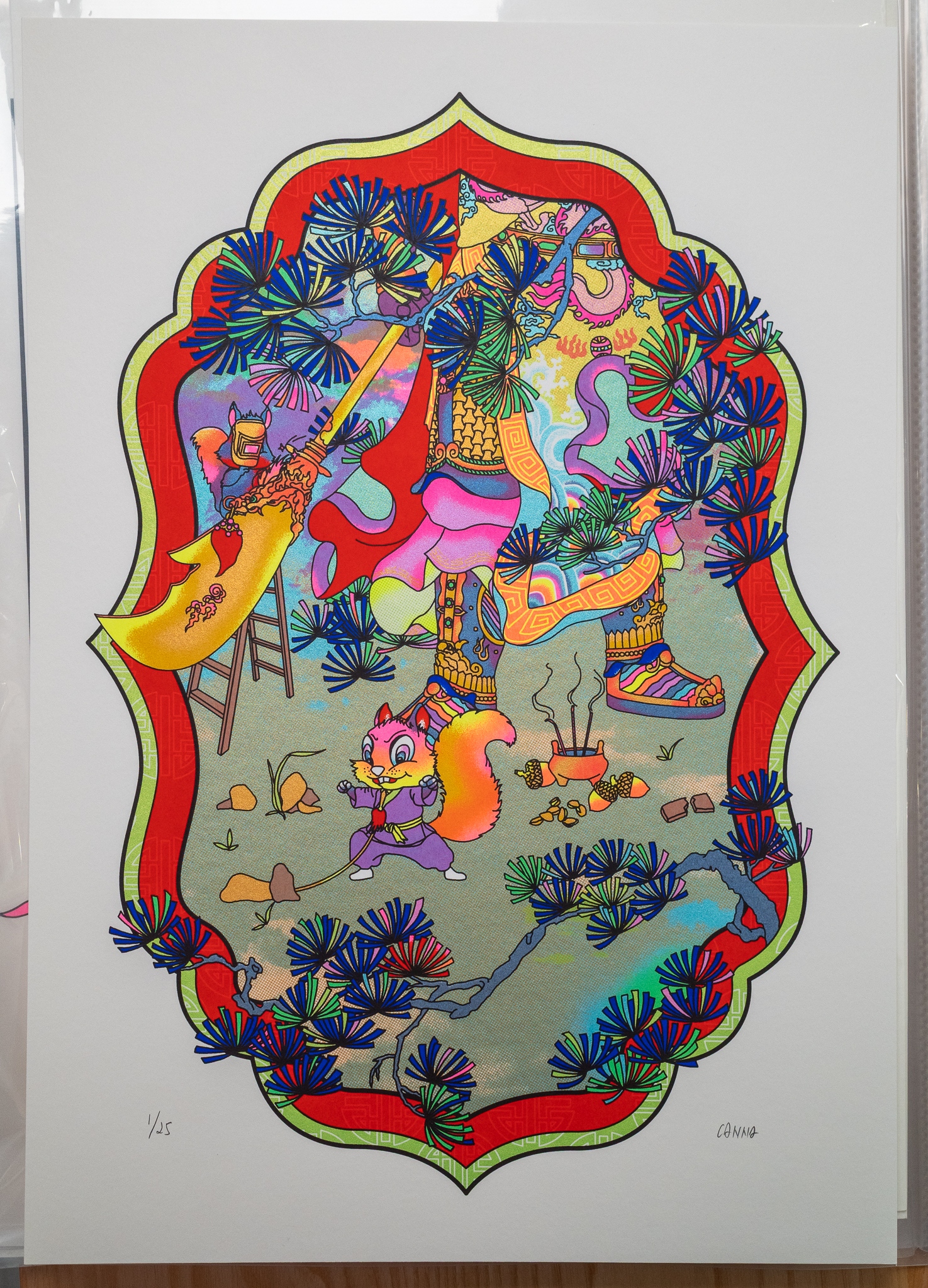
Here, however, both songshu unusually appear together in the same image, which removes the original purpose of the homophone. This is particularly interesting since the two motifs traditionally carry rather different associations: the pine tree stands for endurance and longevity, while the squirrel evokes liveliness, vitality, and abundance. In Canna’s version, both meanings are brought together in one striking image.
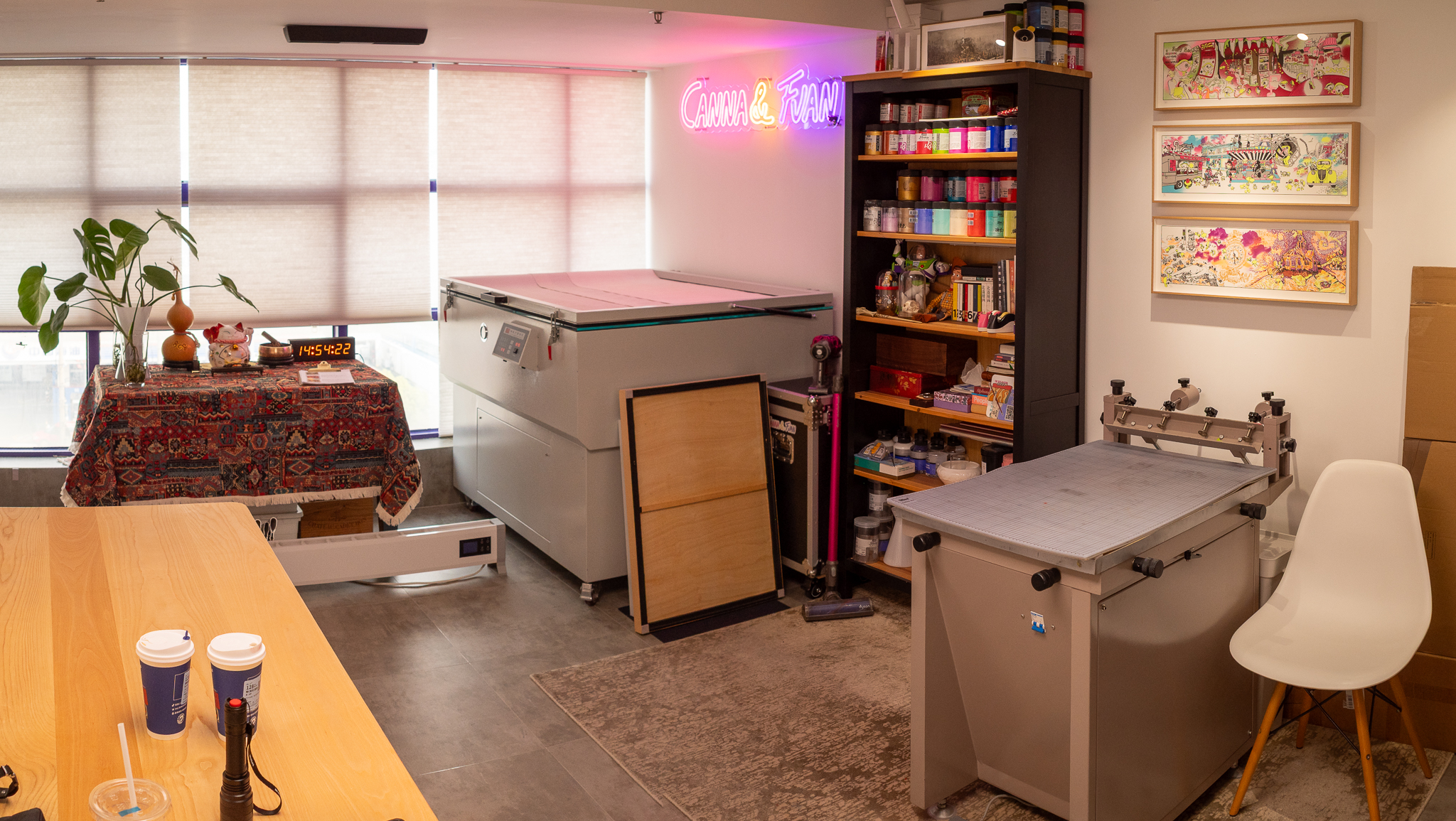
Besides working on traditional forms and content, however, Canna and FVAN engage with the realities of urban life in Shanghai, using vibrant neon colors that even glow under UV light, a hallmark of the technique of screen printing. In addition to its striking colors, the technique is furthermore now closely associated with the Pop Art produced by Andy Warhol in the “Factory” (think of soup cans). Unlike collectors at the beginning of the 20th century, however, no one would now think of these works “not Chinese” enough for that reason.
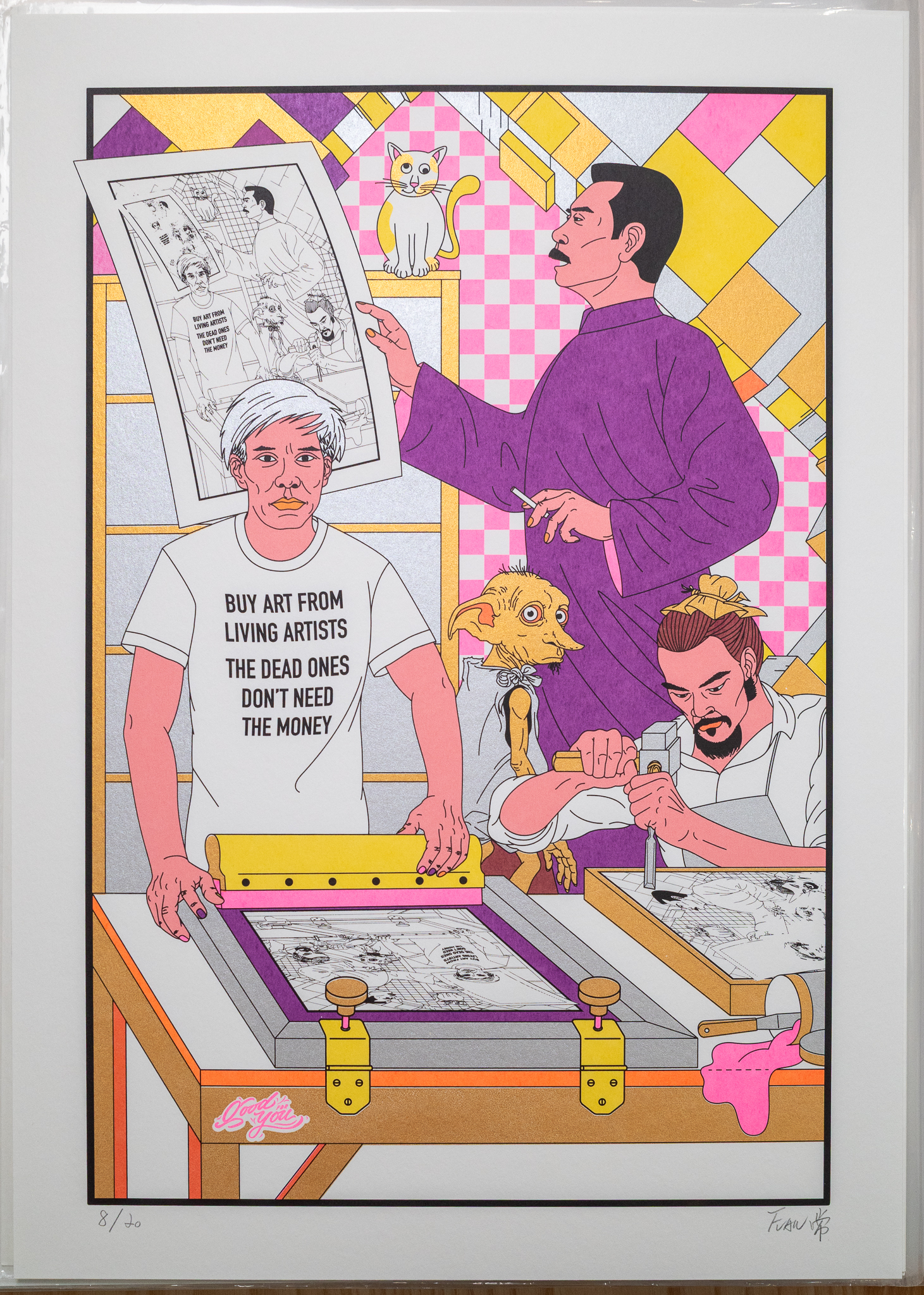
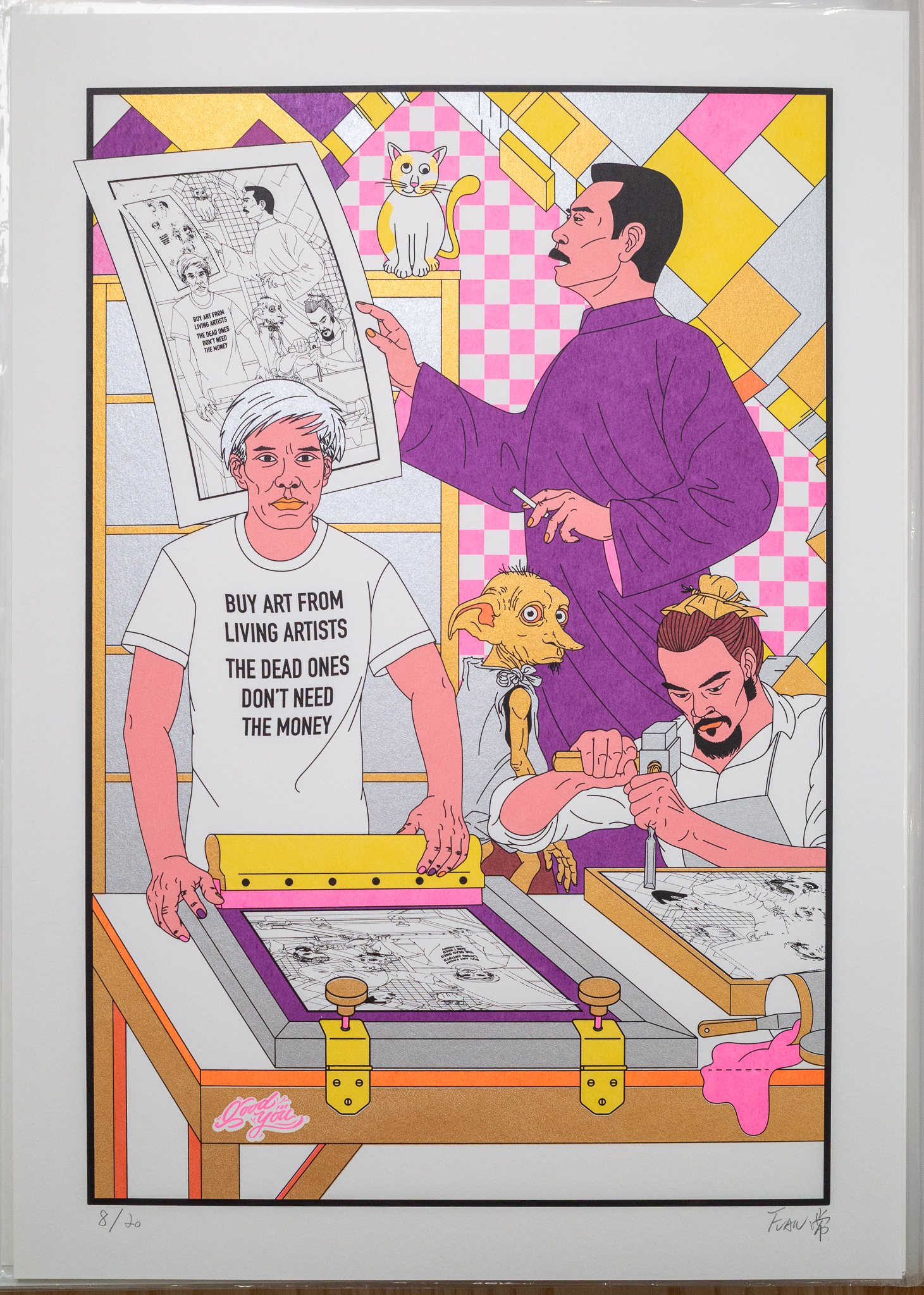
On the contrary: In their art, Canna & FVAN synthesize influences on Chinese printmaking and the very realities of life that can no longer be simply distinguished as “Chinese” and “European.” We see this particularly clearly in the above print by FVAN, which appears to reflect on the influences shaping their work:
At a workbench, the godfather of Pop Art, Andy Warhol, works on a screen-printing frame, while next to him Lu Ban, the Chinese patron god of carpenters and woodworkers, cuts a woodblock printing plate. Both of them are printing the same motif—an image-within-an-image of the whole print we see before us. Standing behind them, the intellectual Lu Xun—one of the earliest advocates for the modernization and politicization of Chinese printmaking—with his signature piercing gaze scrutinizes the same image in his hands, just like we are doing as the viewers of the work. Finally, standing between the three is Dobby, a house-elf from the Harry Potter universe, which took China by storm as a global youth phenomenon in the late 90s and early 2000s. The universe’s characters, particularly their film versions, were repurposed as memes by the Chinese fan community and thus developed a life of their own that transcends a positioning between Western production and Chinese reception.
The punchline of it all, which hits us right between the eyes, reminds us that the work exists not only within historical trajectories and genealogies: Andy Warhol’s T-shirt bears a quote attributed to the artist Guy James Whitworth: “Buy Art From Living Artists. The Dead Ones Don’t Need The Money.”
In this case, I can say I did: The print of the three patron saints of printing has found a place in my collection—in Hamburg.